



Shared Services: Tracking Performance/Performance Metrics—What Doesn’t Get Measured Doesn’t Get Done

email shareprint

Shared Services: Tracking Performance/Performance Metrics—What Doesn’t Get Measured Doesn’t Get Done

Monday, October 3rd, 2011 - 13:20
Thursday, September 1, 2011 - 13:18
In order to gauge the success of a Shared Services implementation, it is important to collect and track key performance metrics before and after the implementation.

It has often been said that what doesn’t get measured doesn’t get done.

Performance metrics are the indicators and statistics an organization uses to gauge performance and to measure progress against desired outcomes. Performance metrics mean accountability. Leaders are accountable for the targets that are established, and supervisors, managers, and employees are accountable for meeting the metrics established by their leadership.

In a Shared Services environment, the key metrics captured can vary by function (human resources, finance, IT), but there are also common metrics that apply to most Shared Services implementations, regardless of function. For example, many successful organizations quantify productivity gains achieved by Shared Services through measures such as:

System Performance

  • Availability of systems
  • System downtime
  • Speed
  • Responsiveness

Process Performance

  • Productivity across employees and processes
  • Revenue per full-time equivalent (FTE)
  • Efficiency in the end-to-end process
  • Set up and adherence to Service Level Agreements (SLAs), policies, and programs
  • Sustainable cost reduction in accounts receivable, invoicing, or general accounting
  • Improvements in the processing of financial transactions

Quality/Satisfaction

  • Employee satisfaction
  • Customer satisfaction
  • Improvements in customer service

Overall Program Performance

  • Return on investment (ROI)
  • Cost savings

Overall, regardless of the function, good metrics are those that are consistent, measurable, and actionable. Regardless of the performance, systems, people, or processes being tracked, the metrics should be simple and straightforward. If the metrics you are trying to manage are overly complex or onerous to maintain, it is less likely that your organization will continue to track them.

Reports are the most common method that managers and leaders use to view their organization’s key performance metrics; they serve as a channel to convey performance metrics to users in an organized and clear manner. In many cases, the onus of running reports rests in the hands of IT resources because the data are not in an easily accessible format. 

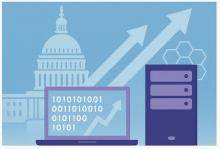
A business intelligence tool can circumvent the accessibility problems with running reports. Business intelligence tools are used to develop dashboards, which are often web-based and can be used to track and display key metrics so that they are readily accessible to leadership and executives. A dashboard provides users with a single point of access to the most up-to-date metrics, and replaces the consuming process of producing and finding reports from disparate systems. A dashboard enables an organization to reap the following benefits:

  • Alignment of metrics with strategic priorities to track progress of key initiatives
  • Easy access to information in a user-friendly and easy-to-understand format
  • Increased speed and efficiency in obtaining required information
  • Transparency and accountability in performance measures

Overall, whether your organization is tracking metrics manually or through a more sophisticated management tool or dashboard, what is most essential is that your performance is being tracked.


 Jennifer Lotkowski Jennifer Lotkowski is a Senior Managing Consultant with IBM Global Business Services and possesses more than 10 years experience in human capital management across the Federal Government and Commercial Sectors. The breadth of her work includes shared services design and implementation, organizational design and development, workforce analysis, competency development, training, change management, and communications. Ms. Lotkowski is an experienced project manager and a Certified Senior Professional in Human Resources (SPHR).

Jennifer Lotkowski (lotkowski@us.ibm.com)


Adam Jelic Adam Jelic has over 18 years of Business Transformation and Information Technology experience. He has deep expertise across several industries including financial, industrial, communications, and the public sector. Mr. Jelic has led large and complex programs including Strategic Business planning, Shared Services, Enterprise Infrastructure, Supply Chain, Human Resources, and Customer Relationship Management.

He has an excellent track record of delivering successful programs for Fortune 50 firms and government agencies in the United States and Canada.

Adam Jelic (ajelic@us.ibm.com)