





Blog

Friday, June 5, 2026
Curating Articles & Insights of Interest in Public Management, Leadership, & Government Technology for the week ending June 5, 2026.

Friday, May 29, 2026
Curating Articles & Insights of Interest in Public Management, Leadership, & Government Technology for the week ending May 29, 2026
Wednesday, May 20, 2026
The IBM Center for The Business of Government continues to identify forward-looking research that provides practical, actionable insights for public sector leaders.

Friday, May 15, 2026
Curating Articles & Insights of Interest in Public Management, Leadership, & Government Technology for the week ending May 15, 2026

Tuesday, May 12, 2026
As cyber threats evolve, legacy systems pose growing risks to mission readiness. This paper explores how the Department of War can modernize mainframes and integrate Zero Trust principles to strengthen security, reduce costs, and achieve audit readiness.

Friday, May 8, 2026
Curating Articles & Insights of Interest in Public Management, Leadership, & Government Technology for the week ending May 8, 2026
Wednesday, May 6, 2026
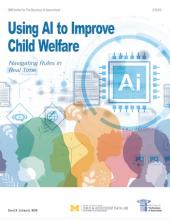
A new report explores how artificial intelligence can help child welfare workers across the country to better support their constituents — not by replacing human judgment, but by freeing up people to spend more time on delivering needed services and less time on repetitive processes.

Tuesday, April 28, 2026
What specific actions can leaders at local, state, and national levels take to ensure that technology serves as a powerful amplifier of human capability?

Monday, April 27, 2026
The Future Shocks case studies initiative is organized by the National Academy of Public Administration, the IBM Center for The Business of Government, and the IBM Institute for Business Value and highlights real-world examples of how governments and their partners are strengthening resilience in an increasingly complex and disruptive world.
Friday, April 24, 2026
Public sector technology leaders share a core challenge—scaling proven innovations beyond pilots while divesting lower value capabilities and expenditures to make room for sustainable impact.